Showing posts with label parenting book of the day. Show all posts

Thursday, February 26, 2009

Self-Care

Tomorrow, I am going to be attending a workshop on self-care, hosted by dear friend and Life Coach, Cathy Northcutt. The topic of this week's one-hour retreat is loving yourself. Next week, Cathy will discuss coping strategies, all while participants are surrounded by soothing sounds and images at the Revive Day Spa & Salon in La Mesa.

Cathy has created a Meetup group for women only, called The Extreme Self-Care Women's Meetup Group so sign up now to start your journey of caring for yourself and putting yourself first.

Another advocate for balanced living, Renee Trudeau, empowers and inspires women, men and families to create the lives they desire.


She has also written a book, The Mother's Guide to Self-Renewal, which will inspire moms to put themselves first (for a change).

Monday, February 23, 2009

Surgery Concerns for Children

My son recently had to have a cavity filled at the dentist's office and was given Versed in order to alleviate his fear of the big needle they used to numb the area they worked on.

He had this procedure done once before and it was a strange experience that I was hoping we wouldn't have to go through again. The effects of Versed are similar to those of alcohol. We were told that our son would be unbalanced, perhaps say strange things and become very sleepy afterward.

His dad dropped him off after the procedure and I had to carry him inside since he couldn't walk. His legs were like rubber. Once we got inside, he asked me if he could go to sleep. Obviously, this is not like him at all, since he's an average 5-year-old with an abundance of energy that keeps him wanting to be active and move all the time.

I had the opportunity to ask an expert about Versed and other issues surrounding anesthesia since I was introduced to the book, Before the Scalpel, by Dr. Dhar.

Author Panchali Dhar, MD, is an Assistant Professor of Clinical Anesthesiology and Anesthesiologist at New York-Presbyterian Hospital/Weill Cornell Medical Center and is board-certified in Internal Medicine and Anesthesiology. She has demystified the process and terms associated with anesthesia and arranged the information in an easy to understand topic-by-topic sourcebook. In Before the Scalpel, Dr. Dhar takes readers into the complicated, fascinating, cutting-edge world of anesthesia.

Here is a brief interview with Dr. Dhar based on questions that many parents have about anesthesia:

1) Do patients really have options when it comes to anesthesia? How much of their choices depend on the insurance coverage they carry?

Certain surgeries do allow anesthetic options. For example, a face lift can be done under deep sedation with local anesthesia or under general anesthesia. A hernia repair can be done under deep sedation with local anesthesia, a spinal, an epidural of under general anesthesia. The right anesthetic is tailored between you, doctors and pertinent surgical issues (such as time length of surgery).

At no point does the type of insurance dictate the anesthetic choice. Every patient is treated equally regardless of insurance or social situation. That is what being a doctor is all about.

2) For moms (like me) who underwent a C-Section, I've always wondered if my child was affected in any way from the anesthesia administered or if there are any risks associated with this?

Regional anesthesia is the most popular form of anesthesia offered to women in labor. It allows a woman to enjoy her labor pain free. Spinal and epidural anesthetics are safe and are provided to thousands of women throughout the world. The amount of medication placed through spinals and epidurals is just enough to make mom comfortable. These medications are targeted to nerves around the spinal cord, and almost zero crosses over to the blood stream. The baby does not get affected. The nice thing about epidural is that if a C-section is necessary, additional medication can provide for a stronger anesthetic level.

Sometimes it is not possible to provide regional anesthesia. This is usually due to technical reasons, emergency situations or various medical reasons. The safety of the mother is always a priority for the anesthesiologist. Some situations require a general anesthetic where the mother is put out completely. The dose of general anesthetic is kept to a minimum until the baby is delivered. Again, thousands of healthy babies are born through C- section under general anesthesia. Not to worry. There are no long lasting effects on the baby.

3) Parents don't want to think about the worst case scenario (their child needing an emergency surgery) but what is the number 1 thing we should know "just in case" this should happen?

If your child should need surgery, make sure the anesthesiologist is particularly trained in "pediatric anesthesia". Children are not miniature adults. The organs such as the heart, lungs, and kidneys don't function at adult levels until the age of 5! Precise medication dosing is based on the exact body weight. All equipment is downsized to miniature levels for the tiniest of newborns.

4) What risks are known about the sedative Versed, provided for children during dental procedures, and what is the difference between these liquid sedatives and a local anesthesia?

Sedative drugs such as Versed are basically short acting Valium type drugs. They make you sleepy, decrease anxiety, and block memory formation. In children under sedatives, monitoring the oxygen level and breathing are important for obvious reasons. Liquid sedatives do not block pain at the site of the dental procedure. A local anesthetic still has to be injected at the site of surgery. The sedatives simply allow the patient to be more accepting of that gigantic needle yet to come.

For details on surgery concerns for children, check out this video:


In Before the Scalpel: What Everyone Should Know About Anesthesia, Dr. Dhar walks readers through the various steps that ensure a safe and pain-free experience during medical procedures that may require or benefit from anesthesia. Before the Scalpel is formatted and illustrated for quick and easy reference in an interactive manner. This is a take-along-book to the doctor’s office, with outlines and room to make notations. Each chapter is a mini crash course for any person who is concerned about the anesthesia aspect of surgery.

Friday, February 20, 2009

Interview with The Successful Single Mom

I had the pleasure with speaking to Honorée Capron about her latest book, The Successful Single Mom. Here are some of the highlights from the interview:
HipM0M: Honorée, thank you so much for taking the time to speak with me today. I recently discovered your book, The Successful Single Mom and I thought, I’m a successful single mom. The book appealed to me and I want all single moms to feel successful, too. Can you tell me how you came up with the idea for putting this book together?

SSM: Being a single mom is the toughest job. I don’t know if you’re a single mom…

HipM0M: I am!

SSM: Ok, so you know! It’s the hardest job times 500,000! ... I was watching the Oprah show last May and she had some people on, and they were kind of emulating the show, “Ten Years Younger,” and they were talking about how these women had kind of let themselves go and what was the impetus for letting themselves go. And the woman that they introduced - it was the third woman, I believe - she came out and she was introduced by Oprah’s staff as being a single mom. And Oprah says, “She focuses on bringing home the money and taking care of the children. Of course she is last on her list.” And I thought, well I’m a single mom and I’ve been a single mom for six yearsI never let myself go and I then I said, wait a second. Yes I did. I went through a tough time.

And I wondered if there was a book about making it through being a single mom that could’ve helped me get through that tough time and helped me feel successful and so I Googled and Amazoned and I couldn’t really find anything that really fit that criteria for me that would’ve been a book that helped me through the process, so I decided to write the book...from a coaching standpoint, but also, I had the experience of being a single mom.

HipM0M: What seems to be the number one challenge for the single moms that you’ve worked with?

SSM: Trying to do it all themselves, not asking for help, not creating a support system.

HipM0M: I definitely agree. I see that quite often. Now, why do you think that is? Why do you think single moms feel intimidated, or whatever it may be, to ask for help.?What is it about our personalities or just being a Mom that makes us feel we have to do it all? I mean, have you found the answer to that?

SSM: I think so! I think that we already have a list (of things to do that is) really long and if someone came and asked us for something we would be fine with it. We are so used to saying, “Yes.” As women we’re going to say yes, right? Because we’re taught to say yes to everything. But we also know that asking for help from someone else would mean that they would be adding to their To-Do list so we’re hesitant to ask for something from others but we would be fine with others asking us. In my work with moms, I encourage them to ask for what they need, which is something I wrote about in my latest blog post, Help a Sister Out.

HipM0M: I see that besides the printed edition of The Successful Single Mom, you can also purchase an e-book and the 100-Day Transformation Program. Can you tell me about what that is?


SSM: I actually started with the 100-Day Program. At 19, I created a 100-Day Program for myself. It was basically 100 Days, 3 Goals, a vision for each of those 100 days and things that I wanted to work on.

I then started using it about 5 years ago, I figured out that… single moms don’t want a big 350-page book. 100 pages is plenty…a quick book with a lot of meat.

I decided to see if this program would work for other single moms so I actually picked other single moms and coached them all for a quarter and it worked. 100 days worked because it was long enough that they could build momentum, see the results … not so long that they felt like it was going on forever.

And we were able to actually see the results. On the last day we celebrated 100 Days and you could see the change in these women. The women actually looked different and were more positive and you could tell that their energy levels had increased.

HipM0M: How do you define success?

SSM: If the bills are paid, I have $5 leftover for a pizza, my child is happy, she sees a happy mom, if my husband is happy…It’s not about the things. I can have all the pretty shoes I want, but if I’m arguing with my husband or my daughter is not happy, I don’t feel successful.

HipM0M: You were a single mom for several years but recently remarried. Congratulations!

SSM: Thank you! I was single and celibate for three years! During that time, I focused on myself. My number one relationship was with myself and I was really protective of my time. But when I was finally ready to date, I knew that as I became more attractive to myself, I became more attractive to other people.

HipM0M: Single moms are often concerned about the right time and exactly how to introduce their significant other into their children’s lives. Can you share what worked for you, or what didn’t work for you?

SSM: I work with a lot of clients and have several friends so my daughter is used to meeting new people. On the second date I had with my current husband, we went back to my house to leso that my babysitter go home. Our first date was about 8 hours. This second date was about six so we had gotten to know each other pretty well by this time.

I introduced him to my daughter and they got to spend time together for about 15 minutes, very briefly but as I was tucking her in that night she said, "I hope he stays your friend.” Kids have that instinctive part of them that really allows them to tune into people, so I really wanted to see her first impression was of him and how he'd be around her.

The bottom line is, don’t introduce someone until you know they’re going to stick. And when you know – you just know!

HipM0M: Are you working on any projects right now?

SSM: Yes, in fact, you’re the first one to know – this is Breaking News: I’m working with a co-author on a cookbookThe Successful Single Mom Cooks! It’s going to be a recipe book filled with great menu ideas that from start to finish will be on your table in 20 minutes.

HipM0M: This is great news, since I know I never want to eat the same things, or at the same time as my son. It’s challenging!

SSM: Right! No more franks and beans or the same old thing each night.

HipM0M: I look forward to that and to letting my readers know about your book, The Successful Single Mom. Is there anything else you want to share?

SSM: I have a group page on Facebook so that single moms can connect with one another. I also just want to acknowledge single moms. If this book appeals to you, it’s because you’re already an amazing mom and you want to be able to continue to be successful. You should give yourself a pat on the back!

If you take care of yourself, you will be successful. I know that the happier I am, the happier my daughter is. If we can model this for our kids then they will be inspired and feel successful.

If you're a single mom, you are are success so raise your glass to you, and the other single moms who continue to inspire us all to be our best, take care of ourselves and support others on similar journeys.

Read more reviews for The Successful Single Mom:

Get Your Life Back and Your Game On!

Chicago Single Mom Examiner

Monday, February 16, 2009

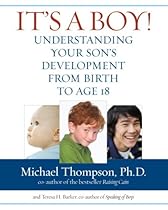
It's a Boy!

Because I was a tomboy and have always felt comfortable around males (I had two male roommates during my last year of college), when I found out, five and a half years ago, that I was pregnant with a baby boy, I was very excited. I also looked forward to having my own father involved in his life, more so - I imagined - than he was during my childhood.

Growing up with a sister always made me that much more interested and curious about males since they were a little foreign to me. I was jealous of my friends who had brothers, either younger or older than us. But, for some reason, when it came time to thinking about raising my son on my own (when his father and I separated), I thought that it would be no problem. I thought, from my feminist point of view, that boys and girls were pretty much the same. They - all children - need love, attention and discipline in order to thrive and survive.

As my son got older, started talking and becoming more active and aggressive, I realized, for the first time probably, just how different boys and girls truly are. Yes, we are all still equals, but to ignore the differences between men and women would do us all a disservice.

I picked up a copy of Dr. Michael Thompson's book, It's a Boy! to figure out ways to enhance my son's self-esteem as he gets older and continues to develop. Since my son recently turned five, I grabbed the book off the shelf once again to read the chapters devoted to boys his age, boys who are getting ready to start school and who continue to become more masculine as they develop and become the "little men" that they are designed to be.


One of the concerns we hear about in the media, regarding boys especially, is their risk for developing and being diagnosed with ADD. It's often difficult to gain our son's attention or have them focus on tasks or assignments in school. As parents, Dr. Thompson claims that there are four things we can do to help children gain good attentional abilities:
  1. Turn off the screen (TV or computer)
  2. Provide a quiet play space where you are nearby
  3. Play games with your son (regularly but not constantly)
  4. Protect that precious time by not scheduling him into too many after-school activities
Another important element to nurturing a young boy's self-esteem is to provide him with opportunities to explore the arts, whether it be music, drawing, clay or woodwork. As Dr. Thompson has seen in over thirty years of working with young boys, "experience in the arts allows a boy to feel a sense of satisfaction that he cannot experience in any other realm of his life. And it allows him insight into himself that he cannot obtain in any other way." He can look at the final result and say to himself, "This is mine. I made it. It represents me."

Many parents that I work with often have difficulties or challenges with communicating or dealing with their sons (more often than with their daughters). I am able to offer them some insight based on my own experiences, along with great advice that Dr. Thompson outlines in this book.

Some fathers often become frustrated with their sons because they feel as though they do not want to spend time with them. Around the age of twelve, young boys really need their fathers and will look to them as role models and companions, someone whom they will strive to be just like as they get older.

Moms raising boys on their own wonder what they can do to help their young boys feel capable and confident. Since boys like to feel needed and useful, simply asking for their help , beginning at an early age, will help. Thompson refers to author Thomas Lickona who says there are three things that will help a boy build strong character: habits of the heart (their desire to want to help), habits of the mind (recognizing situations where help is needed), and habits of practice (following through and providing help). Providing opportunities for your son to help out is vital and as they get older, their responsibilities may shift from having them help you in the kitchen to helping with a major task that requires a bit more "elbow grease."

Another question that comes up when working with single mothers is communication about their child's father, who are not be involved in their lives. Thompson states that it's important for moms to mention their father whenever her son does something that reminds her of him. "He needs to hear that he came from a living, breathing man and that that is a good thing in your eyes."

What else can a father do to help guide a young boy struggling to become more independent? Thompson lists several things that both mom and dad can do:
  • Listen and ask questions
  • Don't look over your son's shoulder at every move he makes
  • Draw the line between being an advocate and being an enabler
  • Be generous with praise, honest and vocal about your love and firm with discipline
  • Focus on his gifts and talents
  • Let your son grow
  • Don't make excuses for your son
  • Model responsible communication for solving problems
  • Set limits and stick to them
  • Never say, "My son would never do that."
  • Create realistic expectations by letting your son fail in order to allow him to figure out how to succeed on his own.
Finally, one of the most important issues that Thompson addresses is how to help your son celebrate the milestone of finally becoming a man. Since society doesn't honor any specific rituals for when a boy truly steps into manhood, parents can create opportunities for their adolescent son to have their own rite of initiation, perhaps something outdoors, where there is the chance for them to experience both commitment and courage, sharing a sense of mission with other young men his age.

Many examples and stories are gathered in this insightful and resourceful guide from Thompson's experience working with boys and men for the majority of his career. As a parent, educator or someone trying to understand their own development, this is a wonderful book to have during any stage of a young man's life as well as a great gift for those wanting a deeper and stronger connection with the male child.

Tuesday, February 10, 2009

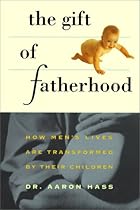
The Gift of Fatherhood

Parenting is certainly not easy. And even though I can't even possibly know what it's like to be a father, I can tell you, based on personal experience with my dad and the father of my son, that fatherhood presents unique challenges that are different than those that mothers deal with.

Aaron Hass, PhD, puts it all together in his book, Gift of Fatherhood. In his work with families that spans over twenty years, Dr. Hass has acquired a great understanding of the issues men face when becoming fathers.


Twelve Reasons Why You Might Not Want to Spend More Time with Your Children:
  1. Parenting is difficult
  2. You wait too long before becoming involved
  3. You made an attempt to engage your child and you were rebuffed
  4. You see your child as a burden rather than a joy
  5. Your children seem to have arrived from another planet
  6. You feel more comfortable with your son than your daughter
  7. The temperaments of you and your child don't seem to fit
  8. You have a very difficult child
  9. You feel financial pressures
  10. You believe parenting is your wife's responsibility
  11. Your children prefer to be with their mother
  12. You avoid being with your child to avoid marital conflict
Why You Should Want to Spend More Time with Your Children:
  1. You will understand their abilities better
  2. You will enhance your child's self-esteem
  3. You may be able to forestall childhood problems
  4. You will have more influence on them
  5. It will enhance your self-esteem
  6. Because of your epitaph
  7. You can do it right
  8. Your child presents you with an opportunity to grow
While I happen to think that some of these issues are a bit out-of-date (do some men still think parenting responsibilities lie with the mother?), I again have to wonder if perhaps they are issues that men deal with. I'm hoping that the fathers reading this can offer some feedback and let moms know what it is that may cause you to seek time away from your children and what it is that motivates you to spend more time with them than your father may have spent with you.

Monday, February 9, 2009

Threesome

Adding a child to a relationship definitely changes the dynamics of a partnership and will usually make things more stressful. People do it every day, though, so there's gotta be something said for creating families and making the beautiful babies that make the world go around. How do couples survive the tumultuous times ahead of them? What can they do to make things easier on their marriage and friendship?

I work with couples all the time who speak of marital issues that stem from their disagreements on parenting and problems that didn't occur before children. There are several books I recommend to parents looking for ways to get their relationship back on track and be the happy, loving couple they once were.


Oftentimes, parents don't take the time to focus on their relationship. They're busy disciplining their children, paying bills, cleaning house, and putting their children before their marriage. While I don't tell couples to neglect their kids or set aside their responsibilities, I do encourage them to make time to go out on a date once a week with their partner. Whether it's a walk through the neighborhood, or dinner and a movie, focusing on your relationship - and not talking about the kids - is a positive thing for the entire family.

With Valentine's Day coming up, I hope that you and your spouse are taking time to do something special alone, without the kids.

Sunday, February 8, 2009

Long-Distance Love

Illustrator Valeri Gorbachev is an amazing artist and she teams up with author Sandra Horning in The Giant Hug, a wonderful book about sharing love and spreading joy.


In this adorable picture book, little Owen wants to send his Grandma a hug even though she lives far away. He comes up with a great plan that requires the participation of many people in the community, sending a hug to his Grandma in a unique and inspiring way.

Readers will be able to recognize the power of love in this story. It makes a great gift for far away grandparents and a wonderful book to read with your child when a hug is needed.

Check out more great children's books for Valentine's Day (or any day).

Saturday, February 7, 2009

Love Stories

John Gray, PhD, is known for his series of books focusing on the differences between men and women and how to use this knowledge to strengthen relationships.

In Mars and Venus in Love, Gray shares the stories of couples he has worked with over the years and asks them to explain what types of problems they've had in their relationships and what works for them as far as communication and expressing love is concerned.


It's essentially a book of love stories - a collection of true-life tales that will show you something about your own love story that may have eluded you for a long time. A few insights, techniques, and changes in habits of mind and body nourish love and make it grow, and like little one-act plays these stories show you how. Mars and Venus in Love gives you the opportunity to see yourself in the stories of others and to recognize your own communication and behavior patterns in the circumstances they describe. It shows you, in many different ways,that:
  • Problems in love are normal
  • There's nothing wrong with you if you have difficulties in your relationships
  • Almost everyone who tries to love has problems getting it right
  • Even when people are deeply in love their relationships won't work if they don't recognize certain truths about men and women
  • Men and women are different
  • The key to falling and staying in love is to recognize and embrace those differences.
Offering you creative ideas for solving problems in your relationships and opening up new avenues for communication, Mars and Venus in Love is an invaluable resource and a perfect companion to Gray's previous books.

For ways to enhance the passion and romance in your life, check out Mars and Venus in the Bedroom.

Friday, February 6, 2009

Questions You'd Never Ask Your Parents

Having an open and trusting relationship with our children is a goal that most parents have, but let's be honest. No matter how open and respectful our relationship, there are many subjects that are a little embarrassing for both kids and parents.

I remember my mom telling me (over and over) how I could talk to her about anything and oftentimes I found myself (and still do) sharing too much information. But the fact remains that there were certain questions I had or things I wanted to know about that I just could never bring up with her.

Elisabeth Henderson and Nancy Armstrong put together an amazing book that I plan on purchasing for my son and slipping under his door someday. 100 Questions You'd Never Ask Your Parents answers many questions in thoughtful, simple ways for those curious and developing teens and tweens.


Providing your child with a safe environment to ask questions is a wonderful thing, but for those kids who just can't seem to say some of these things out loud, this book is a must-have. I even suggest that parents buy this book before their children are ready for these topics so that they can come up with ways to answer their children's questions if and when they are asked.

Thursday, February 5, 2009

Loving Rituals

With Valentine's Day about a week away, I thought the following book would be a great one to share with parents who are looking for fun ways to let their little ones know exactly how much they are loved.


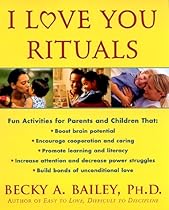
I Love You Rituals includes over seventy different rhymes and games that provide a message of unconditional love and can also enhance children's social, emotional, and school success. Winner of a 1999 Parent's Guide Children's Media Award, these positive nursery rhymes, interactive finger plays, soothing games, and physical activities can be played with children from infancy through age eight. In only minutes a day, these powerful rituals:

  • Prime a child's brain for learning
  • Help children cope with change
  • Enhance attention, cooperation, and self-esteem
  • Help busy families stay close
  • Affirm the parent-child bond that insulates children from violence, peer pressure, and drugs, and much more.

Easy to learn and especially effective in stressful situations, I Love You Rituals gives parents, grandparents, caregivers, and teachers inspiring tools to help children thrive.

Wednesday, February 4, 2009

Are you a PCU?

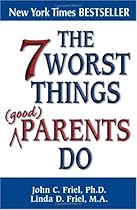
Find out if you're a PCU and learn how to avoid other mistakes that great parents tend to make with the New York Times Bestseller, The 7 Worst Things (good) Parents Do by John and Linda Friel.

Like many parenting books, I've read, this one provides great suggestions that I wish I had discovered earlier. While focusing on what doesn't work for parents and kids, the authors of this book provide ways to change the habits and behaviors that parents are used to and turn them around for a more rewarding experience.

Here's a note from the authors that might help you better understand why they created this book:

Raising children is by far the most rewarding and daunting experience any human being can have. We say this from our own experience as well as that of the many people with whom we have worked. Raising children tremendously strains a couple's emotional, financial, intellectual, spiritual and physical resources. Not surprisingly, research on marital happiness shows that couples are most satisfied with their marriages before the first child is born and after the last child leaves home. We therefore greatly respect those who currently engage in the daily tasks of leading their offspring from infancy into the independent adulthood that is the ultimate goal of parenting.

Parents who search for books of wisdom on child-rearing will discover a bewildering, nearly infinite array of titles on the subject, which suggests that we are more confused and concerned about how to raise our children than almost anything else in the universe. Despite their confusion and lack of confidence, the majority of parents care about what happens to their children: And this is good.

As we are catapulted into the twenty-first century, along with our laptop computers, internet connections, cellular phones, fares, pagers, digital video disc players, five hundred channels of cable television, and the ever-present CNN news instantaneously informing us of major happenings around our tiny planet, it is incredibly important that people continue to care about the basics of life. Which brings us to the origins and purpose of this little book.

We have been psychologists for a long time and are continually grateful for the work that we are able to do. Some people are grateful for their artistic talents, some for their business acumen and some for their scientific wisdom. We are grateful for the daily opportunities we have to work with people who choose to struggle. We do nor find it boring. We do not go home at night feeling drained and empty. And contrary to what you might already be thinking about us based on the title of this book, we by no means believe that we have all the "right" answers for people. But we do have many years of experience helping people work through their problems, and as a result, we have formulated some fairly clear opinions about what works and what doesn't, for many people. We have also been around this field long enough to know that the instant anyone suggests a universal rule for child-rearing, an exception will appear somewhere, giving us all cause for great humility. On the one hand, life is much too awesome, mysterious and complex to be reduced to a simple formula. On the other hand, without principles and guidelines for living, we become little more than wild animals prowling the earth in search of our next meal, ready to kill anyone who gets in the way of our quest. This is one of the paradoxes of living--too many rules and guidelines squeeze the life right out of us, while too few result in life threatening chaos.

With the above considerations in mind, we set out with the limited goal of sharing with you seven of the most important parenting considerations that we have identified over the years. The list is by no means conclusive. And we are well aware that some of these items will not apply to you; for some people, none of them will apply. As with the other books we have written, all we ask is that you give this material a chance-grapple with a particular concept a little bit rather than reject it out of hand. While we don't claim to have all the right answers, you may just find that some of the pain you experience as a parent is at least partly caused by one of these seven parenting errors.


Check it out. You'll be glad you did!

Tuesday, February 3, 2009

What I Love About You

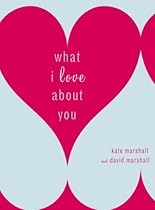
You can't go wrong this Valentine's Day if you pick up a copy of Kate & David Marshall's What I Love About You for your special someone.


The fill-in-the-blank book will have you and your partner focusing on your relationship and what it means to love unconditionally.
This book prompts you to say what is in your heart, but may not always be at the tip of your tongue. Tell the most important person in your life just how much they mean to you by completing the scores of unique, evocative checklists, short answers, and phrases in this attractive gift book:

If we'd first met in a comic strip, the thought bubble over my head would have said...

I adore this little daily ritual or habit we have...

One of your most irresistible physical features is...

I missed you when...

Playful, tender, and personal, this is the perfect gift for the person in your life who makes your pulse race.
Couple this with How to Love Me, by Ali Davis, for more wonderful ways to communicate with your loved one and learn to express your innermost thoughts and desires to strengthen your bond.

Monday, February 2, 2009

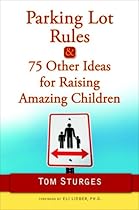
Parking Lot Rules

If you ever read Robert Fulgum's All I Really Need to Know I Learned in Kinderarten, then you'll understand what I mean when I say that Tom Sturges' Parking Lot Rules is this decade's version of Fulgham's go-to-guide for parents.


Here are some examples of Sturge's words of wisdom:
• EVERYDAY: Let your children feel welcome and loved from the first moment he or she walks into a room. “Smile When You See Him” (rule #4) and leave no doubt that, at that moment, your child is the most important person in your world.

• COMMUNICATING: Since yelling parents intimidate, and a calm tone inspires, “When You Get Upset, Whisper” (rule #22) –and make sure your message is heard.

• MANNERS MATTERS: Follow “The Bill Walton Rule,” (rule #34) and if you can’t be on time, be early.

• NO LOST CHILDREN: When a family or group travels together, obey “The Caboose Rule” (rule #43) by assigning an adult or older child to keep up the rear–and ensure that no little ones lag behind.

• DISCIPLINES AND PUNISHMENTS: “The 10-Second Rule” (rule #49) prescribes the minimum amount of time you should wait before thinking about punishing your child for that D in English.

• PAIN HAPPENS, NOW WHAT?: After your child experiences a little cut, bump, or scrape, say “Squeeze My Hand as Much as It Hurts” (rule #62); it is remarkable how their being able to “show” you will help to ease his or her pain.

• PLAY SPORTS, PERIOD: When your children accomplish something great in their sports, using “The ESPN Rule,” (rule #67) tell the story in intimate detail and fill them with the belief that they can do it again and again.
Written in quick chapters with amazing stories that will inspire you and change the way you view communication and child-rearing, Parking Lot Rules is a must-have for new parents and those seeking ways to make life easier.

Friday, January 30, 2009

New Feature

When I first drew the road map for my website (over a year ago) I had envisioned a page in which I'd recommend some great parenting books but it never dawned on me that I'd be adding books to that list continuously.

I have recently created a Happy Healthy Hip Parenting Bookstore so that the books can be easily seen, purchased and shared. I've decided to use the blog as a place to highlight a book - once a day - simply because there are so many on that list and it just keeps growing.

Today's Parenting Book of the Day is
Life Lessons from Soccer: What Your Child Can Learn On and Off the Field-A Guide for Parents and Coaches by Vincent Fortanasce.


Parent-tested and approved by the American Youth Soccer Organization (AYSO), this indispensable book by a parent, coach, and doctor shows soccer moms, dads, and coaches how to encourage children to look beyond winning and to turn every game and practice into an opportunity to teach life lessons.

Dr. Vincent Fortanasce applies his expertise in child development to guide parents and coaches on:
  • Emphasizing fun over performance and morality over victory
  • Understanding the way kids think and their capabilities at each developmental stage
  • Controlling their own touchline behavior
  • Instilling character, conscience, and courage in every player, regardless of talent
In Life Lessons from Soccer, Vincent Fortanasce celebrates the enchantments of soccer as a learning ground for family values and life lessons -- and for becoming closer to your children on and off the field.